
Redson Dev brief · PRIMARY SOURCE
Toward provably private learning from federated data
Google Research · October 2, 2026
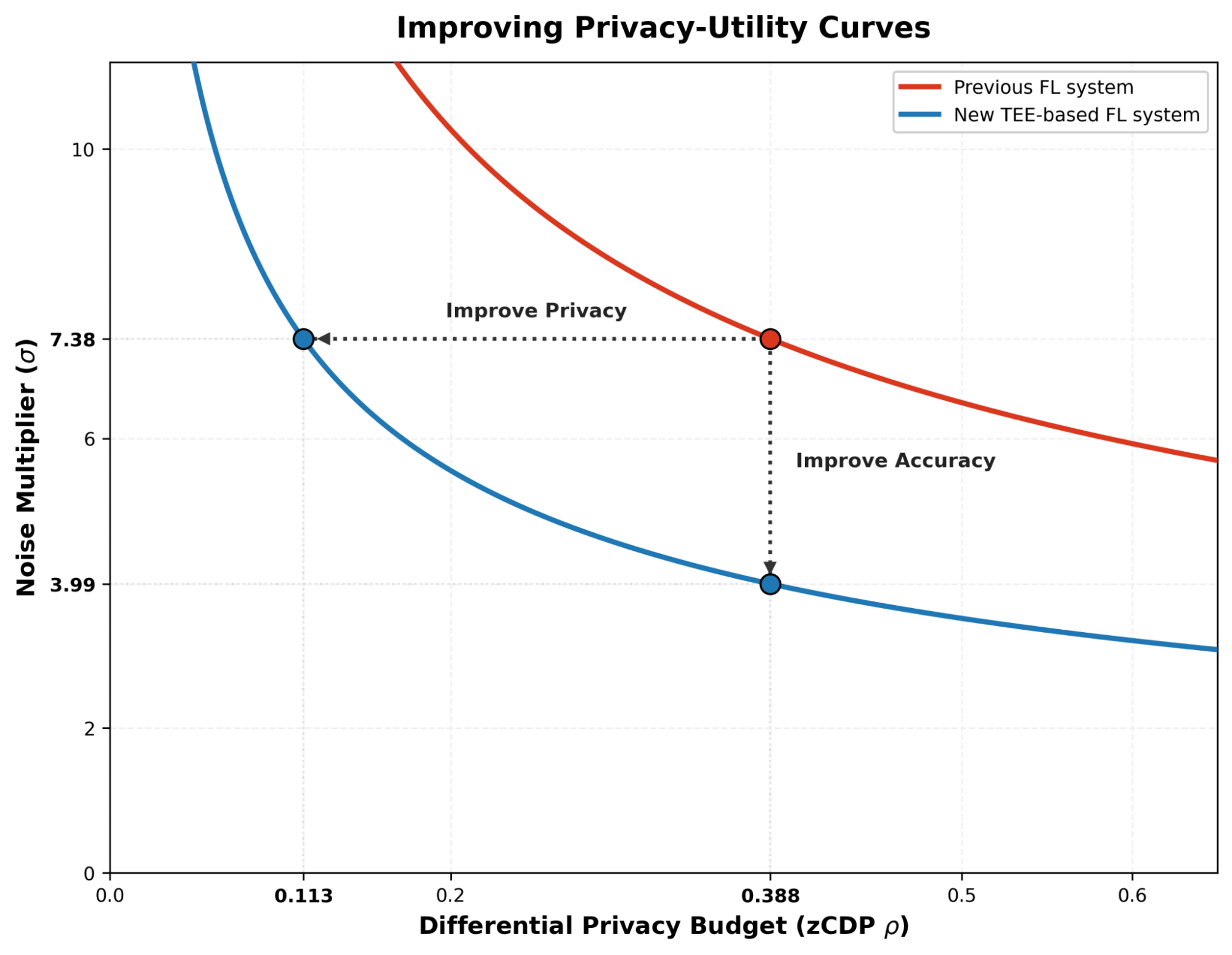
Many organizations grapple with the fundamental tension between leveraging distributed data for machine learning insights and upholding stringent privacy commitments. This Google Research article explores advances in cryptographic techniques that enable privacy-preserving machine learning, specifically focusing on how data from numerous sources can contribute to a shared model without ever exposing individual data points. The core finding is that "secure aggregation" methods, including multi-party computation, can be strengthened to provide mathematical guarantees of privacy while still permitting accurate model training, addressing a long-standing challenge in federated learning. For developers and operators, this directly impacts how they can architect systems that both learn from sensitive user data and comply with evolving privacy regulations like HIPAA or CCPA. Consider a healthcare startup in Boston developing an AI diagnostic tool for rare conditions; instead of requiring hospitals to centralize sensitive patient records, this approach allows each hospital's data to contribute to the model locally, sharing only encrypted, aggregated parameters, significantly reducing data breach risks and compliance burdens. Similarly, an indie SaaS founder in San Francisco building a personalized recommendation engine for small e-commerce shops could now offer a robust, privacy-first solution, aggregating user preference data across multiple stores without any single store owner or the SaaS provider ever seeing individual customer browsing histories. Even an internal IT team at a mid-sized financial firm in Chicago could use these principles to train a fraud detection model using data from various departmental silos, improving accuracy without consolidating sensitive customer transaction logs into one vulnerable repository. The practical upshot is the ability to unlock insights from distributed, private datasets that were previously too risky or legally complex to centralize. This mitigates compliance headaches and enhances user trust, which is invaluable in today's data-conscious landscape. To capitalize on this, consider a small experiment: identify a specific, sensitive dataset within your current operations that is currently underutilized due to privacy concerns. Then, research open-source libraries or frameworks that implement secure aggregation or differential privacy techniques, and attempt a miniature proof-of-concept to train a simple model (e.g., a linear regression) on a small, synthetic version of that data using these methods, observing the trade-offs between privacy guarantees and model utility.
Source / further reading
Learn more at Google Research →