
§ Blog · Signal from the noise
Blog
Auto-aggregated articles, YouTube drops and Spotify podcast episodes from a curated allowlist — each with a short AI-written brief and a link straight back to the source.
1043 items
- ARTICLEMIT Technology Review — AI · Sep 18, 2026
Could AI really kill us all? Your questions, answered.
The prevailing anxieties around advanced AI, particularly those concerning existential risks, offer a crucial opportunity for developers and founders to build trust and educate users rather than just chase capabilities. The MIT Technology Review piece dissects common fears about AI's potential for societal harm or even human extinction, providing a grounded perspective on the current scientific consensus and the various hypothetical pathways and safeguards involved. It aims to demystify sensationalist headlines by explaining the mechanisms, or lack thereof, by which AI could genuinely pose a catastrophic threat, differentiating between speculative future risks and present-day challenges. For those building or deploying AI, understanding and addressing these public concerns directly affects adoption and regulatory landscapes. Consider a small e-commerce platform in Austin, Texas, using AI for personalized recommendations; transparently explaining that its AI is a predictive tool, not an autonomous agent making life-altering decisions, can reduce customer apprehension and foster loyalty. Similarly, an indie SaaS founder in Seattle developing an AI-powered data analysis tool for small businesses could gain a significant competitive edge by providing clear documentation that articulates the solution's limitations and oversight requirements, reassuring users that the AI enhances human decision-making rather than replacing it unchecked. An internal IT team at a mid-size logistics company in Chicago, evaluating AI solutions for route optimization, might find that vendors who openly discuss AI safety protocols and model explainability frameworks are far more appealing, as this directly mitigates perceived operational risks and eases employee concerns about job displacement or system failures. This widespread anxiety about AI's ultimate trajectory should prompt a shift from simply showcasing AI's power to proactively building and communicating its guardrails. Instead of focusing solely on what an AI *can* do, focus on what it *cannot* do autonomously or what human oversight mechanisms are firmly in place. This week, take one AI feature you are currently developing or using and draft a concise, plain-language statement explaining its specific scope, its inherent limitations, and the human intervention points designed to prevent unintended or undesirable outcomes. Share this internally or with early users to gauge their reception of this transparency.
#AIRead brief → - PODCASTHard Fork · Sep 18, 2026
A.I. Safety Goes Mainstream + a ‘Hard Fork’ Exit AMA
The discussion around AI safety has moved from academic circles into the mainstream, creating both new risks and significant opportunities for businesses navigating the evolving technological landscape. This particular episode from Hard Fork delves into the escalating dialogue around artificial intelligence safety, examining why major AI developers are increasingly advocating for regulation, the political responses to these calls, and the inherent tension between rapid innovation and responsible development. It highlights the growing imperative for companies and policymakers alike to consider the societal implications and guardrails for advanced AI systems. For an independent SaaS founder in, say, Brooklyn, New York, integrating AI safety considerations into their product development isn't just about ethics; it's a future-proofing strategy. By proactively designing systems that prioritize fairness, transparency, and explainability—perhaps by implementing rigorous data auditing or bias detection in their large language model-driven content generation tool—they can differentiate themselves in a competitive market and avoid future regulatory hurdles or reputational damage. Similarly, a logistics startup in Dallas, Texas, using AI for route optimization or supply chain prediction, might find that investing in robust anomaly detection and human-in-the-loop oversight systems not only mitigates potential catastrophic errors but also builds trust with clients wary of fully autonomous operations. Even for an internal IT team at a mid-size financial services firm in Chicago, understanding the nuances of AI regulation can guide their procurement of third-party AI solutions, ensuring vendor compliance and reducing the firm's exposure to liability from opaque or biased algorithms affecting credit decisions or fraud detection. To capitalize on this shift, consider a focused audit of any AI components currently in use or under development within your organization. Identify one specific area where an AI system touches a critical business process or user interaction. Then, this week, allocate a few hours to brainstorm concrete ways to introduce a "human oversight layer" or implement a "transparency report" for that particular AI's decisions, even if it's just an internal log for now.
#AI#ProductRead brief →
- PODCASTWaveform: The MKBHD Podcast · Sep 18, 2026
WTF is a Googlebook?
In a landscape increasingly defined by iterative updates and ecosystem entrenchment, understanding the strategic movements of platform giants is paramount for anyone building within those ecosystems. Google's annual Android Show provides one such critical vantage point, offering direct insight into the near-term future of mobile software. This week, the Waveform podcast offers a thoughtful digest of this developer-facing event, giving a concentrated view of Google's focus areas and product roadmap, particularly relevant as AI integration becomes a non-negotiable. The latest episode of Waveform unpacks the recent Android Show, where Google unveiled its latest advancements and strategic directions for the Android operating system. Marques Brownlee, Adam, and Mariah lead the discussion, dissecting the key announcements made by Google. They highlight developments that extend beyond the core OS, touching on innovations like the "Fitbit Air," which signals Google's continued push into connected health and wearable technology, further diversifying its influence across user data and device interaction. The discussion also ventures into lighter territory with Ellis and Rufus orchestrating a Reddit-themed "Family Feud" style game, adding a distinct flavor to the usual tech review format. Among the specific points of interest, the exploration of the Android Show's "I/O Edition" details reveals Google's continued emphasis on developer tooling and new APIs, indicating where builders should direct their attention for future integrations and features. The mention of the "Fitbit Air" is noteworthy, suggesting a deeper integration strategy between Google's software and acquired hardware platforms, which could open new avenues for health-centric applications. The podcast’s structure, while informal, manages to distill the essence of Google's announcements, providing listeners with a structured overview without getting lost in granular detail. For software, AI, or product builders, the central takeaway from this discussion is Google's persistent strategy of platform diversification and deepened ecosystem integration, particularly in health tech. Understanding the new APIs and developer-focused announcements from the Android Show is crucial for anticipating future user expectations and technical requirements. Builders should consider how their current or future products can leverage these new functionalities, especially within areas like health monitoring and ambient computing, to create more impactful and integrated user experiences.
#Hardware#ProductRead brief →
- VIDEOTwo Minute Papers · Sep 18, 2026
DeepSeek’s Insane New Architecture
This week, a significant development in large language models offers a path to achieving sophisticated AI capabilities with markedly reduced operational overhead. The core innovation, exemplified by DeepSeek's new architecture, centers on models that perform comparably to leading larger counterparts while requiring substantially less computational power and memory. This efficiency gain stems from advancements in model structure and training methodologies that prioritize performance-to-resource ratios, making advanced AI more accessible and sustainable for a wider range of applications. For a freelance web developer in Denver, Colorado, this means integrating custom, context-aware AI features into client websites without needing expensive, high-end GPU servers; they can now offer more sophisticated chatbots or content generation tools that run efficiently on standard hosting environments, expanding their service offerings. A small e-commerce shop owner in Austin, Texas, specializing in artisanal goods could leverage such models to personalize product recommendations or analyze customer feedback at scale, all on a budget that previously wouldn't permit such advanced AI, improving customer experience and informing inventory decisions without a dedicated data science team. Even an internal IT team at a mid-size logistics company in Chicago, Illinois, could deploy an internal knowledge base AI capable of answering complex queries about routing, regulations, or inventory management for their dispatchers and drivers, improving operational efficiency and reducing human error without prohibitive infrastructure costs. The practical advantage lies in the ability to run more capable AI models closer to the edge or within existing, more modest infrastructure. This democratizes access to advanced natural language understanding and generation, shifting the focus from raw model size to efficient, impactful deployment. It opens doors for innovation in areas where latency, cost, or data privacy historically made large-scale AI impractical, enabling more companies to experiment with and integrate advanced AI into their products and workflows without massive upfront investments. To capitalize on this, consider a concrete, low-stakes experiment this week: identify one small, repetitive text-based task within your team or personal workflow that currently requires human intervention or a basic rules-based script. This could be summarizing internal meeting notes, drafting initial responses to common customer service inquiries, or generating short product descriptions. Research and download one of the publicly available, highly efficient, and smaller-footprint language models (often referred to as 'Flash' or 'Lite' versions from reputable research labs), then attempt to fine-tune it with a small dataset relevant to your chosen task, even if it's just a few dozen examples. This will give you firsthand experience with the resource demands and potential impact of these optimized architectures.
#AIRead brief →
- ARTICLEGoogle Research · Sep 17, 2026
The future of practice: Enabling teachers to create learning interactives with generative UI
The ongoing challenge of rapidly developing engaging educational tools just got a significant boost through generative user interface capabilities. This Google Research piece details a system that empowers educators to design interactive learning materials without needing coding expertise, effectively turning conceptual lesson ideas into functional web-based exercises. By leveraging generative AI for UI creation, the system greatly reduces the technical barrier to developing custom educational content, allowing teachers to focus on pedagogy rather than programming. For developers and founders, this capability points to a powerful future for user-generated content platforms and specialized tooling. Consider an indie SaaS founder in San Francisco developing a niche platform for vocational training: instead of building complex visual editors, they could integrate a generative UI module that lets instructors quickly prototype and deploy interactive simulations for welding or electrical work. Similarly, a small e-commerce shop owner in Dallas aiming to onboard new staff could use such a system to generate interactive product knowledge quizzes or inventory management tutorials for their team, significantly cutting down training time and development costs. A mid-sized internal IT team at a hospital system in Atlanta might leverage this to allow department heads to create specific, interactive training modules for new medical equipment or updated compliance procedures, rather than relying on IT for every single build. The core value lies in democratizing complex UI generation, enabling subject matter experts to ship functional tools directly. To capitalize on this, consider a micro-experiment this week. For a current project or a pain point you're observing, identify a scenario where non-technical users consistently struggle to articulate or implement their UI needs. Envision how a generative UI prompt, much like describing an interactive lesson to an AI, could translate their textual or conceptual input into a functional wireframe or even a basic interactive prototype. Focus on a single, contained interaction and explore how much of the front-end grunt work could be bypassed by starting from a descriptive prompt rather than a blank canvas.
#AI#DevRead brief →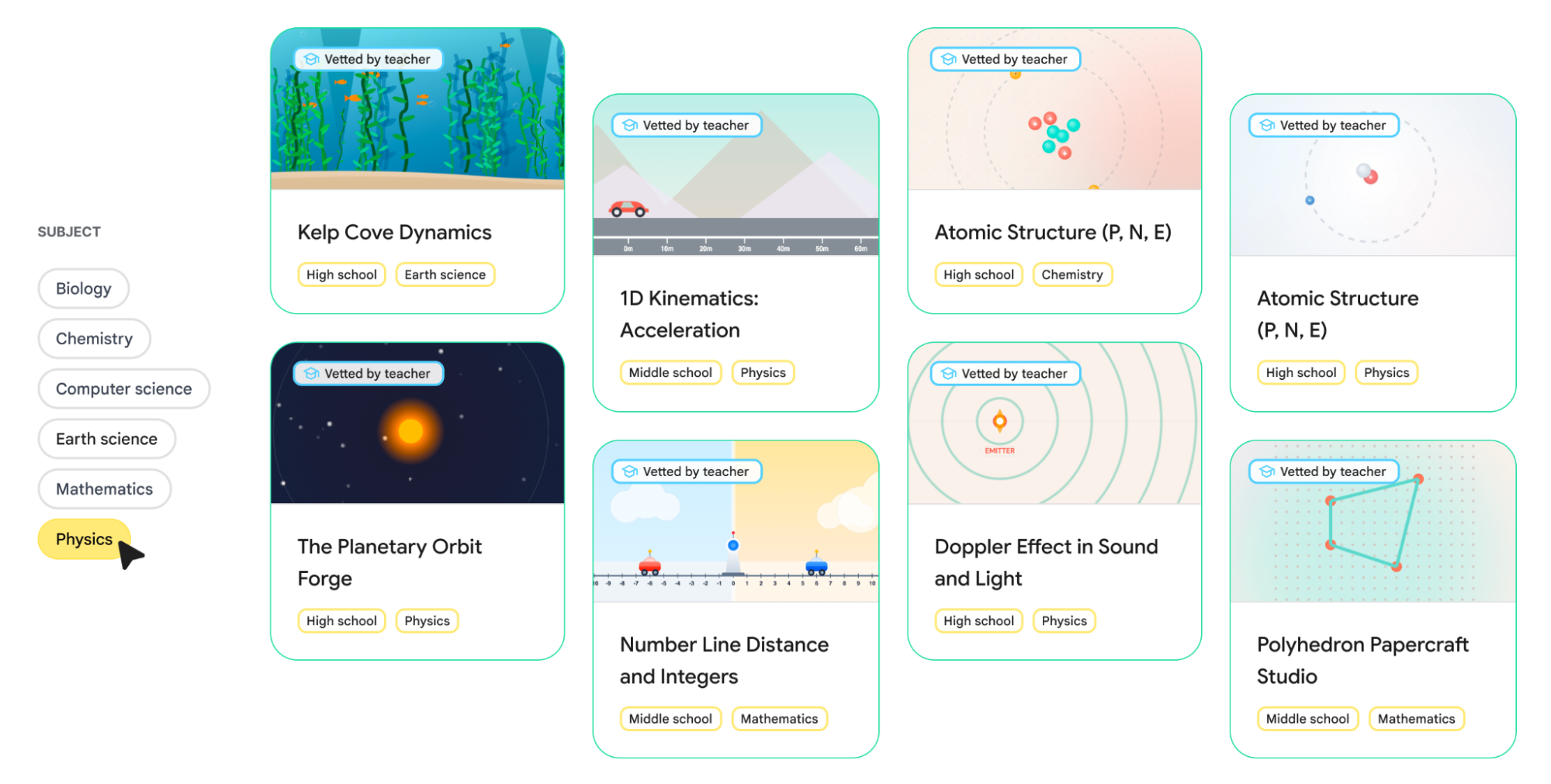
- VIDEOFireship · Sep 17, 2026
Did Google just kickstart the intelligence explosion?
The advent of Dream-RSI presents a compelling opportunity for practitioners across industries to accelerate the exploration and optimization of complex systems through AI-driven simulation. This recent Google DeepMind technique, as explored by Fireship, outlines a method where an AI leverages its past learning experiences—essentially its 'discovery logs'—to construct a simulator. This internal model then allows the AI to rapidly test and refine thousands of potential exploration strategies without the need for real-world interaction, dramatically reducing the time and resources typically required for traditional trial-and-error approaches. For an independent SaaS founder in Boulder, Colorado, specializing in supply chain optimization for local breweries, this could mean dramatically faster iteration on new routing algorithms. Instead of laboriously running small-scale real-world trials or complex external simulations that require significant compute, they could use a Dream-RSI-inspired approach to internally simulate countless delivery permutations, quickly identifying optimal paths and resource allocations before deploying to live systems. Similarly, a clinical operations manager at a hospital in Atlanta, Georgia, could adapt this concept to model patient flow through emergency departments, allowing an AI to test various staffing and bed allocation strategies against historical data, predicting bottlenecks and identifying improvements without disrupting actual patient care. Even a small e-commerce shop in Portland, Oregon, struggling with inventory management could employ this principle to simulate demand fluctuations and replenishment strategies, ensuring shelves are stocked optimally without over-investing in warehousing or risking stockouts. To begin harnessing this potential, consider a small, contained problem within your current operations that involves iterative decision-making or exploration. This week, try to abstract your system’s past operational data or log files into a simple, structured format. Then, conceive of a basic model that could use this data to simulate future states based on different inputs, mimicking the core idea of an AI building its own internal testing environment. This initial experiment, however crude, can illuminate pathways toward more sophisticated, self-optimizing solutions.
#Dev#AIRead brief →
- ARTICLEAWS Machine Learning · Sep 17, 2026
Reduce time-to-hire for quality candidates with AI-powered Amazon Connect Talent
For businesses navigating the competitive US talent landscape, a new approach promises to significantly shorten the path to securing high-caliber candidates. The piece from AWS Machine Learning describes Amazon Connect Talent, an AI-powered hiring solution designed to streamline the recruitment process. It leverages artificial intelligence to conduct initial interviews, perform data-driven candidate assessments, and ensure consistent evaluation across applicants. The core claim is that this system, informed by Amazon's extensive experience in hiring science, empowers recruiters to more efficiently identify strong fits while offering a flexible and transparent experience for job seekers, ultimately accelerating the time-to-hire for quality roles. This development directly impacts founders, HR leaders, and operations managers by offering a scalable mechanism to elevate hiring practices. Consider a rapidly expanding indie SaaS founder in Austin, Texas, struggling to filter through hundreds of junior developer applications; this system could automate initial screenings, presenting only the most promising individuals for human review and freeing up critical development time. Similarly, for the internal IT team at a mid-sized financial services company in Charlotte, North Carolina, looking to fill specialized cybersecurity roles, the AI-led assessments could objectively benchmark technical skills and behavioral traits, reducing bias and ensuring a consistent evaluation standard that aligns with their stringent compliance requirements. Even a high-growth logistics startup in Chicago, Illinois, needing to quickly scale its operational staff, could leverage this solution to maintain hiring quality and speed without overstretching its recruitment department. The practical advantage lies in automating the initial, often time-consuming, stages of recruitment, allowing human expertise to focus on strategic decisions and final candidate engagement. It’s about leveraging AI not to replace recruiters, but to augment their capabilities, enabling them to process more candidates more effectively and consistently. The system's emphasis on transparency in scoring and assessments also builds trust and provides clear, data-backed rationale for hiring decisions. To immediately explore this concept, consider one of your current open roles or a recent hiring challenge. This week, define the five most critical, objective skills or traits for that position that could theoretically be assessed through structured questions or scenarios. Then, brainstorm how an automated system could reliably test for these, focusing on consistency and eliminating subjective human factors from initial screening. This exercise will clarify how an AI-powered system could deliver measurable efficiency and quality improvements to your specific hiring pipeline.
#AI#DevRead brief → - ARTICLEAWS Machine Learning · Sep 17, 2026
Selecting a vector store for Amazon Bedrock Knowledge Bases
Unlocking optimal performance and cost efficiency for retrieval-augmented generation (RAG) applications hinges critically on your choice of vector store. This AWS Machine Learning analysis meticulously evaluates three prominent AWS vector store options—Amazon OpenSearch Service, Amazon Aurora PostgreSQL with pgvector, and Amazon S3 Vectors—specifically in the context of Amazon Bedrock Knowledge Bases. The team provides benchmarks and a practical framework for selecting the most suitable store based on various RAG use cases, detailing how each impacts factors like retrieval speed, scalability, and operational expense. For developers and operators, this directly translates into informed decision-making that can significantly impact project viability and user experience. Consider a small e-commerce shop in Austin, Texas, looking to deploy a Bedrock-powered chatbot for customer service. Choosing S3 Vectors might offer the simplest, most cost-effective solution for a modest product catalog and infrequent queries, avoiding the overhead of managing a database. Conversely, a logistics startup in Chicago building a RAG application to analyze complex shipping manifests and provide real-time updates to clients might find Aurora PostgreSQL with pgvector offers the balance of structured data management and vector search performance needed for sophisticated, frequently updated knowledge bases. Even an internal IT team at a mid-sized financial firm in New York City, developing a secure internal documentation search tool, could leverage OpenSearch Service for its robust indexing and advanced search capabilities, ensuring rapid, precise information retrieval from a vast and constantly evolving data corpus. The practical implication here is a tangible guide to sidestep common pitfalls of over-provisioning or under-performing infrastructure for your AI initiatives. It equips you to match technical requirements with cost-effective solutions, ensuring that your Bedrock Knowledge Bases deliver the desired impact without unnecessary expenditure or complexity. This analysis empowers you to build smarter, more efficient AI-driven products and services, whether you are a solo founder or part of a larger enterprise. To put this into immediate practice, identify one current or prospective RAG application in your workflow that relies on Bedrock Knowledge Bases. Spend an hour this week sketching out its core requirements: data volume, query frequency, latency tolerance, and budget constraints. Then, cross-reference these against the capabilities and cost profiles of OpenSearch, Aurora with pgvector, and S3 Vectors to determine which aligns best, even if you’re just running a quick proof-of-concept.
#AI#DevRead brief → - ARTICLEAWS Machine Learning · Sep 17, 2026
A serverless, data-driven Git metrics dashboard using Amazon Quick Sight
For teams struggling to get a real-time pulse on their development velocity and output, a practical, low-cost solution for actionable insights has emerged. The referenced article from AWS Machine Learning details how to construct a fully serverless pipeline that automatically gathers Git metrics from popular platforms like GitHub and GitLab. It then visualizes these metrics in interactive dashboards using Amazon QuickSight, offering engineering teams near-real-time delivery analytics without the usual overhead. This is about transforming raw commit and pull request data into clear, accessible indicators of team performance and project health. This directly impacts anyone overseeing technical projects or managing development teams by providing a transparent window into operational effectiveness. For a logistics startup in Austin, Texas, grappling with deployment bottlenecks, such a dashboard could immediately highlight stages with high code review times or identify contributors consistently blocked. An indie SaaS founder based in Denver, Colorado, running a lean operation, could leverage this to understand if their small team's feature delivery pace is sustainable, allowing them to adjust sprint planning based on concrete metrics rather than gut feelings. Even a mid-sized e-commerce platform in Chicago, Illinois, aiming to optimize its release cycles, could pinpoint specific repositories or modules experiencing frequent reworks, directing resources where they matter most. The primary benefit is moving beyond anecdotal observations to data-driven decision-making, which can lead to more efficient resource allocation, proactive problem-solving, and improved project predictability. This approach provides an objective baseline for measuring the impact of process changes or new tooling, fostering continuous improvement within engineering organizations of any size. To begin leveraging this idea, identify a single, core Git repository central to your team's current work. Spend an hour sketching out three key metrics you believe are most indicative of that repository's health or your team's efficiency (e.g., average time to merge a pull request, number of open pull requests, daily commit count). Then, explore the conceptual steps involved in connecting a data source to a visualization tool to display these simple metrics, even if it's just locally.
#AI#DevRead brief → - ARTICLEAWS Machine Learning · Sep 17, 2026
A shared agentic platform for Wood Mackenzie, on Amazon Bedrock AgentCore
Every business can now streamline the creation and deployment of AI agents without constantly reinventing foundational infrastructure. The AWS Machine Learning team highlights how Wood Mackenzie developed APEX, a shared agentic platform leveraging Amazon Bedrock AgentCore. This system allows their teams to deploy production-ready AI agents efficiently, bypassing the complex, repetitive task of building runtime environments, identity management, observability tools, and guardrails from scratch for each new agent. Essentially, it provides a standardized, pre-configured framework that accelerates the move from concept to operational AI agent. This capability profoundly affects how organizations approach AI development. For a mid-sized e-commerce company in Austin, Texas, imagine their customer service department could rapidly build an AI agent to handle common return inquiries, then their marketing team could concurrently spin up another agent to analyze customer sentiment from social media posts, all without either team needing a dedicated DevOps engineer for infrastructure setup. A logistics startup operating out of Chicago, for instance, could deploy an agent to optimize delivery routes and another to automate inventory checks, knowing that the underlying security and monitoring are handled centrally. Even a freelance designer in Portland, Oregon, partnering with a larger agency, could conceptualize and help deploy a client-facing AI tool that adheres to strict compliance without personally configuring every back-end component, allowing them to focus on the creative problem-solving an agent delivers. The core advantage lies in enabling broader adoption and faster iteration of AI solutions by abstracting away significant technical overhead. It democratizes agent creation beyond highly specialized AI teams, allowing business units to build tools relevant to their specific needs. This shift not only reduces development costs and time but also fosters a culture of innovation where experimenting with AI agents becomes less daunting and more integrated into routine operations, leading to novel applications and improved efficiency across diverse business functions. To capitalize on this, consider a small, internal IT team in Des Moines, Iowa. Their immediate experiment could involve identifying a single, repetitive internal process—perhaps triaging basic support tickets or summarizing internal meeting notes—and using the concepts outlined to sketch out how a simple AI agent, leveraging a platform that provides core agentic infrastructure, could automate or assist with this task. Focus on the agent's specific function and the data it would interact with, rather than getting bogged down in the foundational infrastructure details.
#AI#DevRead brief → - ARTICLEAWS Machine Learning · Sep 17, 2026
How MRH Trowe enabled secure self-service AI agents in financial services
This brief addresses how organizations can deploy secure, self-service AI agents, unlocking immediate productivity gains while adhering to strict regulatory frameworks. The AWS Machine Learning piece details how a German insurance broker provided 400 employees with secure, self-service access to AI agents within its first month of production, specifically navigating the rigorous security, data residency, and compliance demands of the German financial sector. This was achieved by integrating AWS Bedrock AgentCore with complementary tools to create an environment where agents could operate effectively and responsibly, a critical challenge for many enterprises considering AI adoption. For a mid-sized legal firm in Boston, this approach demonstrates a viable path to empowering paralegals to draft initial summaries of discovery documents or research case precedents using AI, without fear of data leakage or non-compliance with client confidentiality agreements. Similarly, a logistics startup based out of Chicago, managing complex supply chains, could implement self-service agents to automate initial client inquiries about shipment statuses or proactively identify potential customs delays, dramatically improving response times and reducing operational overhead. Even a municipal government department in Portland, Oregon, could use this model to provide staff with AI assistance for drafting public notices or summarizing citizen feedback, maintaining necessary data privacy and internal governance. The core takeaway is that compliant, internal AI adoption is not just for tech giants; it's accessible to entities of varying sizes and regulatory needs. This capability significantly affects developers by providing a blueprint for building enterprise-grade, secure AI applications rather than just prototypes. Founders gain insight into how to deliver genuinely transformative tools to their teams and clients, creating new value propositions grounded in compliance. Operators, particularly those in regulated industries, can see a clear path to leveraging AI for efficiency without compromising security or regulatory standing, allowing their teams to offload repetitive tasks and focus on higher-value work. To begin exploring this, consider identifying a specific, low-risk internal process that is currently manual and time-consuming within your organization, such as summarizing internal reports or drafting routine communications. Experiment with a simple AI agent, ensuring it operates within a controlled, secure environment, and evaluate its efficacy and compliance adherence.
#AI#DevRead brief → - ARTICLEAWS Machine Learning · Sep 17, 2026
Implementing defense-in-depth authorization for MCP tools on Amazon Quick
Securing access to your internal AI tools becomes significantly simpler and more robust when you can apply fine-grained authorization policies at scale. This AWS Machine Learning piece demonstrates a comprehensive approach to implementing defense-in-depth authorization for Model Context Protocol (MCP) tools integrated with Amazon Quick. It details how to leverage existing identity providers like Microsoft Entra ID, using group and claims-based JSON Web Tokens (JWTs), to enforce both role-based and attribute-based access controls through an Amazon Bedrock AgentCore Gateway interceptor. The core idea is to establish server-side checks and an immutable audit trail for every interaction, ensuring that only authorized individuals and applications can access specific AI capabilities. For a mid-sized financial planning firm in Dallas, Texas, this means their developers can build an internal AI assistant for compliance checks, ensuring that only certified analysts can access or modify client-sensitive financial models, while junior staff might only see aggregated, anonymized data summaries. A logistics startup based in Atlanta, Georgia, could use this to gate access to their predictive route optimization models; their truck drivers might only see their next few stops, whereas fleet managers gain full access to adjust routing parameters. Similarly, an independent SaaS founder in Denver, Colorado, specializing in niche project management tools, can confidently integrate advanced AI features into their offering, knowing they can precisely control which customer tiers or user roles can interact with expensive or sensitive AI services without rewriting their entire authentication layer. The implications for developers and operators are substantial: reduced security overhead, enhanced compliance posture, and faster deployment of secure AI applications. Instead of building custom authorization logic for each new AI tool or endpoint, you can centralize policy enforcement, leveraging established identity management systems. This translates directly into saved development time and reduced operational risk, allowing teams to focus on innovation rather than bespoke security plumbing. Even for newer ventures, like those founded in 2022, adopting such robust frameworks early provides a critical advantage for scaling securely. To put this into practice, consider an internal AI-powered knowledge base your team might be building. This week, pick one specific AI capability within it – perhaps a summarization agent or a code-generating assistant – and identify two distinct user groups who should have different levels of access. Map out how you would use your existing identity provider to assign claims or roles to these groups, then explore how to configure a simple gateway interceptor to enforce a basic "read-only" versus "full access" policy for that single AI capability, without modifying the AI model itself.
#AI#DevRead brief →
§ Recommended hub
Where we get our signal.
YouTube channels
WatchFireship
@Fireship
100-second explainers on every framework, AI tool and dev trend.
Subscribe →Two Minute Papers
@TwoMinutePapers
Bite-sized walkthroughs of fresh AI and graphics papers.
Subscribe →Yannic Kilcher
@YannicKilcher
Paper deep-dives — what actually works under the hood.
Subscribe →Lex Fridman
@lexfridman
Long-form conversations with AI researchers, founders and scientists.
Subscribe →DannyThatGuy
@dannythatguy
Africa Tech Kin — on-the-ground takes on fintech, telecom, AI policy and product reviews across the continent.
Subscribe →Podcasts
ListenLex Fridman Podcast
Lex Fridman
Long conversations with the people building AI, robotics and the future.
Listen on Spotify →Hard Fork
Kevin Roose & Casey Newton (NYT)
Weekly takes on AI, agents, and the platforms shipping them.
Listen on Spotify →a16z Podcast
Andreessen Horowitz
Conversations on tech, trends and the people building them.
Listen on Spotify →Waveform: The MKBHD Podcast
Marques Brownlee & Andrew Manganelli
MKBHD and team go long on the gadgets and stories of the week.
Listen on Spotify →