
Redson Dev brief · PRIMARY SOURCE
Bypassing inference bottlenecks: Accelerating complex AI search with Retrieve-for-Train
Google Research · September 15, 2026
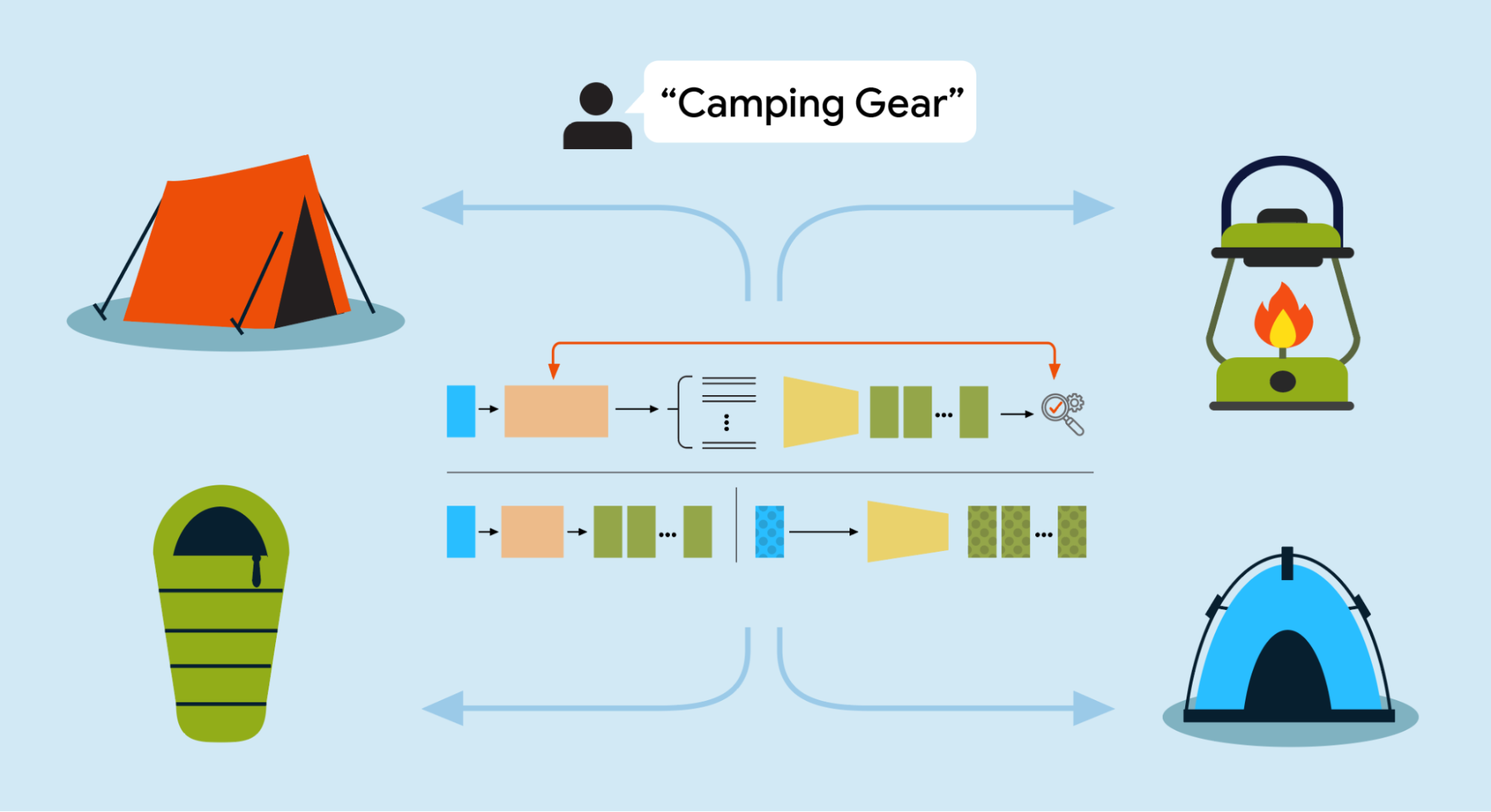
Accelerating complex AI search can unlock significant efficiencies and new product capabilities, and a recent development from Google Research offers a pathway to bypass common inference bottlenecks. This innovation focuses on "Retrieve-for-Train," an approach that pre-computes and optimizes the retrieval phase of complex search tasks, particularly those involving large language models, by treating it as a training-time optimization rather than solely an inference-time challenge. By strategically packaging relevant information before the core AI model even begins its reasoning, it dramatically reduces the computational load and latency associated with generating responses or insights from vast datasets. For a mid-sized e-commerce platform based in Austin, Texas, this could mean drastically faster and more accurate product recommendations for shoppers, allowing them to instantly surface highly relevant items even from a catalog of millions, thereby boosting conversion rates and customer satisfaction. A logistics startup operating out of Chicago, Illinois, could leverage this to optimize route planning and resource allocation in near real-time, sifting through live traffic, weather, and delivery schedules to identify the most efficient paths without bogging down their operational systems with slow AI queries. Similarly, an internal IT team at a hospital system in Boston, Massachusetts, could deploy this to accelerate diagnostic support tools, ensuring doctors get immediate access to relevant patient histories, research papers, and best practices from immense medical databases, ultimately speeding up critical decision-making without waiting for resource-intensive AI models to churn through information. To capitalize on this, consider one small, specific experiment this week. If you're building any application that currently relies on searching large or complex datasets and then applying AI to those results, identify a key retrieval step that often precedes the main AI inference. Experiment with pre-computing and caching the most frequently requested or computationally expensive aspects of that retrieval, essentially creating a "retrieve-for-train" mini-pipeline that feeds your existing AI model. Observe the latency and resource usage difference.
Source / further reading
Learn more at Google Research →