
Redson Dev brief · PRIMARY SOURCE
Empty shelves or lost keys? Recall is the bottleneck for parametric factuality
Google Research · August 12, 2026
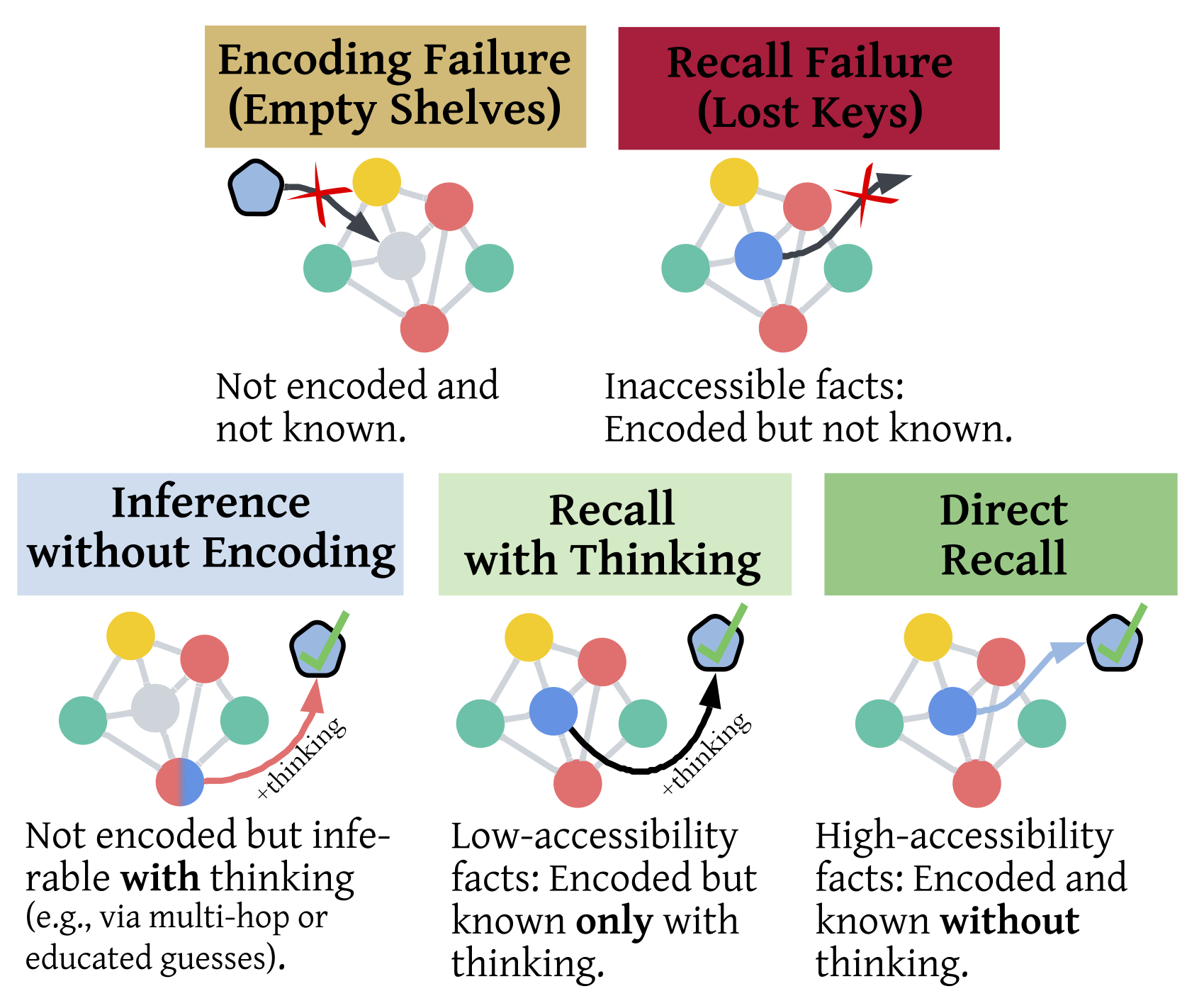
The ongoing challenge of generative AI producing plausible-sounding but incorrect information is directly addressed by new insights into improving "recall," offering a clear path to more reliable AI outputs for practical business applications. This research from Google Research dives into the core problem of parametric factuality, which describes an AI model's ability to accurately retrieve and use factual information embedded within its training data, even when that information is not explicitly presented in the prompt. It highlights that the primary bottleneck isn't necessarily the model's capacity to *reason* or *generate*, but rather its capability to effectively *recall* specific, factual details from its vast internal knowledge base. For developers, founders, and operators, understanding this distinction is crucial because it reframes how we approach AI reliability. Consider a small e-commerce shop in Austin, Texas, using AI to generate product descriptions: instead of overhauling the entire generation pipeline, focusing efforts on optimizing the recall mechanisms could lead to significantly fewer inaccuracies regarding product dimensions or material compositions, saving time on manual corrections. Similarly, an internal IT team at a mid-sized healthcare provider in Boston, Massachusetts, leveraging AI for internal knowledge base queries, could find that enhancing the recall aspect of their models yields more precise answers to questions about specific policy documents or system configurations, reducing compliance risks and improving operational efficiency. A logistics startup based in Chicago, Illinois, aiming to use AI to predict supply chain disruptions might find that improving factual recall helps their system accurately identify specific warehouse stock levels or port congestion statuses, rather than making generalized, less useful predictions. To capitalize on this, developers should critically evaluate their current AI implementations, particularly those involving factual retrieval, through the lens of "recall." This means moving beyond just prompt engineering and exploring techniques that strengthen the model's ability to access and utilize its stored factual knowledge more reliably. A specific experiment you can run this week involves taking an existing generative AI application that occasionally hallucinates factual details—perhaps a content generation tool or a customer service chatbot. Identify 5-10 common factual inaccuracies it produces, then investigate if integrating retrieval-augmented generation (RAG) approaches, or fine-tuning the model on specific factual datasets with an emphasis on precise recall, demonstrably reduces these errors. Focus on comparing the consistency of factual output before and after such interventions.
Source / further reading
Learn more at Google Research →