
Redson Dev brief · PRIMARY SOURCE
Seeing beyond BMI: Estimating cardiometabolic risk with smartphone imagery
Google Research · August 17, 2026
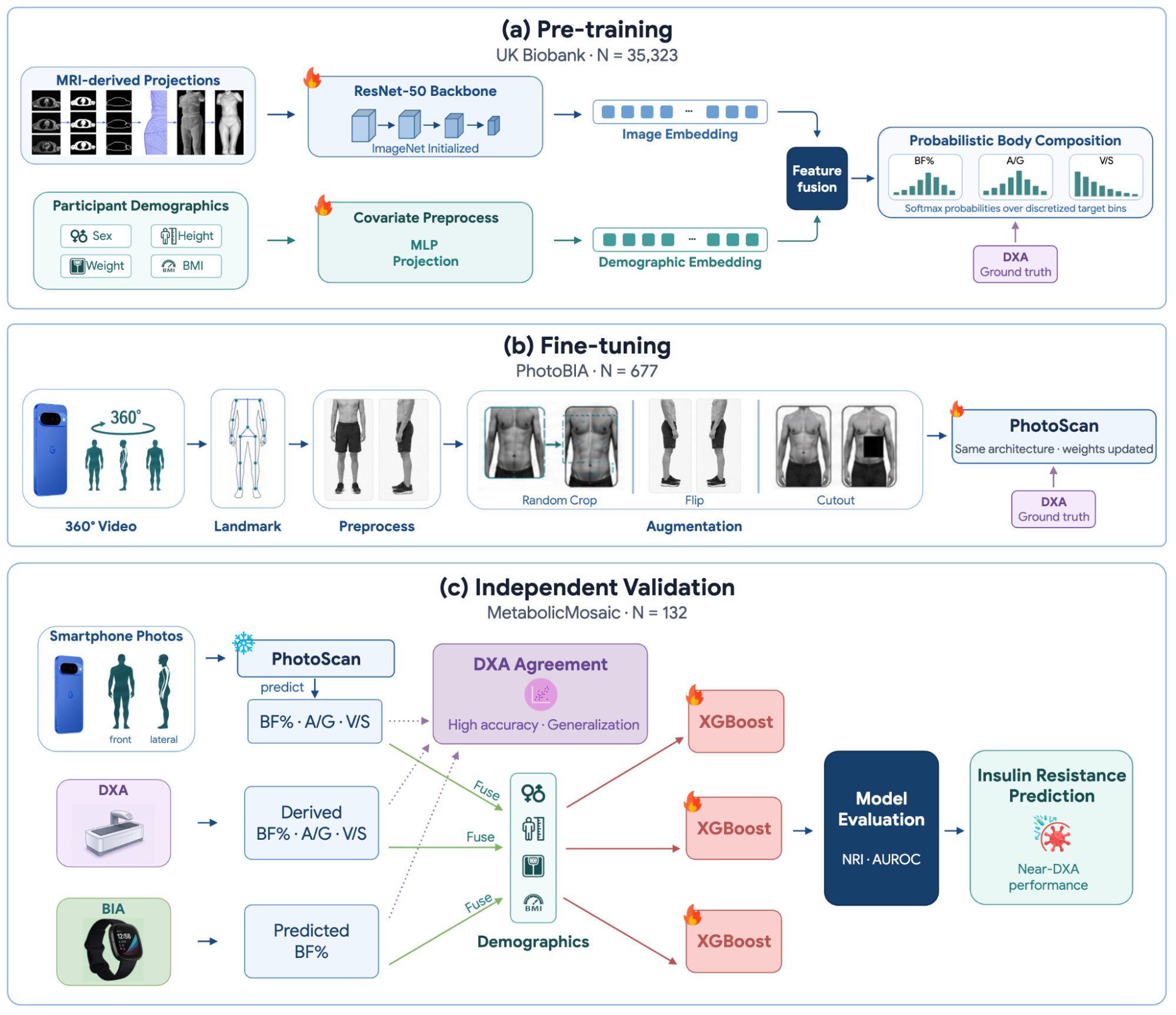
The ability to quickly and non-invasively assess certain health indicators offers profound opportunities for both personal health management and broader healthcare applications. This Google Research piece details work on using standard smartphone camera imagery to estimate key cardiometabolic risk factors, moving beyond traditional Body Mass Index (BMI) measurements. By analyzing facial and body region images, the research explores how machine learning models can predict blood pressure, cholesterol levels, and glucose levels with a level of accuracy that suggests practical utility. This approach leverages widely accessible technology to potentially provide early, convenient insights into health risks, making health monitoring more integrated into daily life. For developers and founders, this research opens avenues for creating new services and tools that empower users with proactive health data. Consider a small startup in San Francisco building a personalized wellness app: integrating this kind of image-based analysis could allow users to track trends in their cardiometabolic markers from home, encouraging preventative action without needing specialized medical equipment for every check-in. An operator at a national fitness chain, perhaps with locations in Boston or Miami, might explore incorporating this technology into their member portals, offering a novel way for clients to monitor progress beyond weight or body fat percentage, driving engagement and demonstrating a commitment to holistic health. For an independent developer, it presents a compelling case for building open-source libraries or modules that facilitate the integration of similar computer vision techniques into diverse health applications, from telehealth platforms to dietary planning tools. The practical implications extend to improving accessibility and efficiency in healthcare. Imagine a rural clinic in Wyoming, where access to specialized diagnostic equipment is limited; a nurse practitioner could use a tablet with this integrated technology to perform initial screenings for at-risk patients, identifying those who require immediate, in-person follow-up more efficiently. This doesn't replace clinical diagnostics but acts as a powerful triage and early warning system, democratizing access to crucial health insights. It underscores a future where personal devices become more intelligent partners in health, fostering a culture of continuous, low-friction self-monitoring that could lead to earlier interventions and better outcomes across diverse populations. To start capitalizing on this, consider a micro-experiment: take existing image data from a small, consenting user group, perhaps collected via a simple web app or internal tool, and explore what basic facial or body measurements you can extract using off-the-shelf computer vision libraries. Don't aim for medical diagnosis; instead, focus on correlating these visual features with any self-reported health data (like exercise habits or general well-being) to understand the practical feasibility and potential privacy considerations of visual data analysis in your own context.
Source / further reading
Learn more at Google Research →