
Redson Dev brief · PRIMARY SOURCE
How Diffusion Controller unifies and simplifies AI image generation
Google Research · September 29, 2026
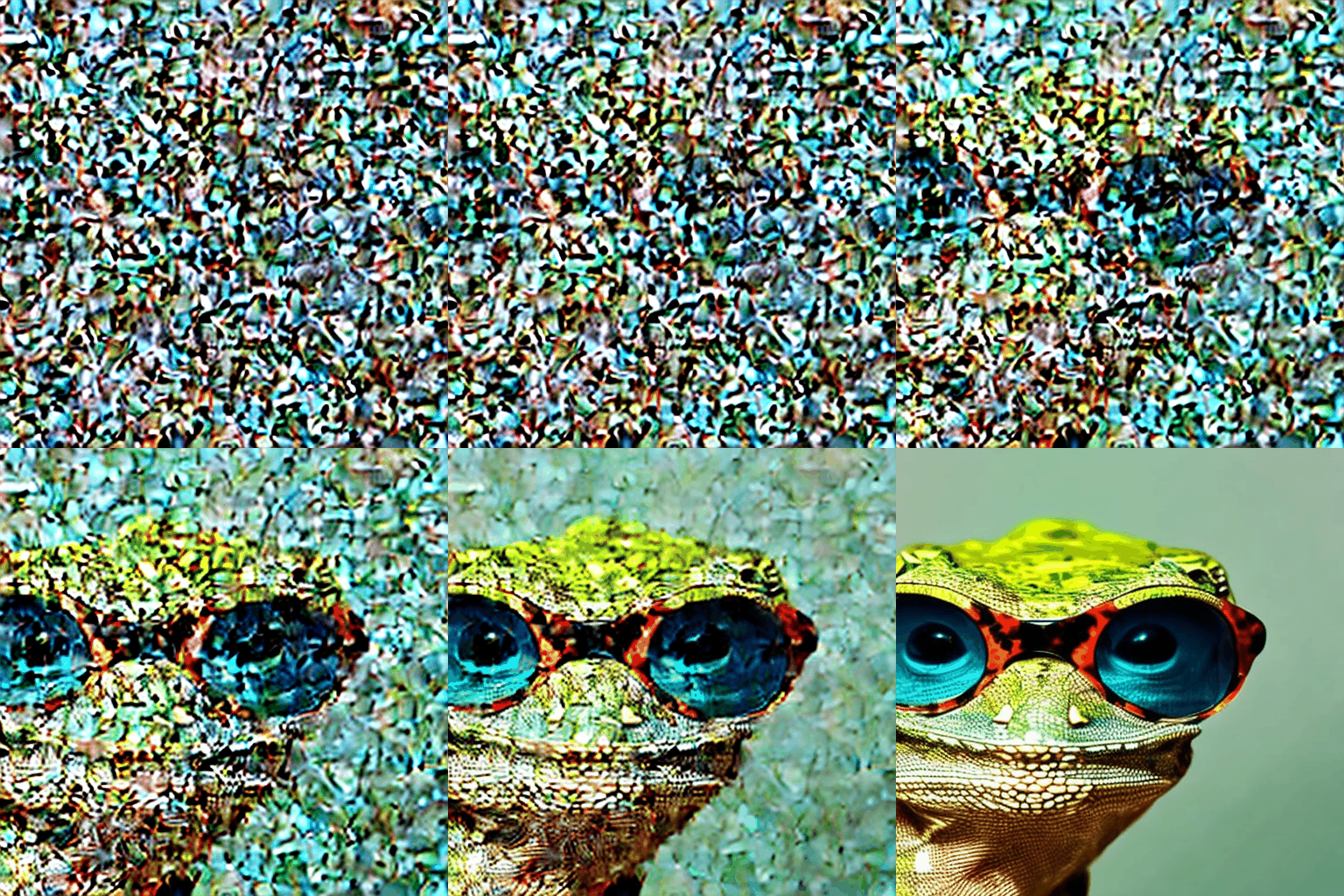
The advent of Diffusion Controller provides a practical pathway to achieving more precise, unified control over generative AI image models without needing extensive retraining or complex prompt engineering. This innovation from Google Research introduces a novel, lightweight method that allows developers to integrate control signals – such as depth maps, segmentation masks, or edge detections – directly into existing diffusion models, effectively unifying various control types into a single, adaptable framework. The core idea is to guide the model's generation process more effectively, making it easier to create images that adhere closely to specific structural or semantic layouts. This directly impacts how businesses and creators can leverage AI imagery. Consider a freelance graphic designer in Portland, Oregon, who frequently uses AI tools for concept art. With Diffusion Controller, they could take a rough sketch of a building's facade, convert it into an edge map, and then use that map to guide an AI model to generate photorealistic architectural renders in various styles, saving hours on manual adjustments and ensuring design consistency. An e-commerce startup in Austin, Texas, specializing in custom furniture, could photograph their product in a studio, generate a depth map, and then use that map to place the furniture seamlessly into diverse virtual room settings – from a loft apartment in Brooklyn to a ranch house in Montana – for marketing materials, all while maintaining precise perspective and scale. For a logistics startup in Chicago developing an internal asset tracking system, they could use segmentation masks of warehouse layouts to quickly generate visual representations of new floor plans or storage configurations, streamlining planning and avoiding costly physical mock-ups. To begin capitalizing on this, developers could start by exploring open-source implementations of control-oriented diffusion models or similar architectural patterns. Pick an existing diffusion model you are familiar with and try to integrate a simple structural control signal – perhaps a basic Canny edge detection or a simple segmentation mask – into its inference pipeline. Experiment with how much control you can exert over the generated output by varying the strength of this external guidance, observing how it refines the imagery to better fit your desired structural parameters without altering the core model.
Source / further reading
Learn more at Google Research →