
Redson Dev brief · PRIMARY SOURCE
ToolGrad: Efficient tool-use dataset generation with textual "gradients"
Google Research · September 10, 2026
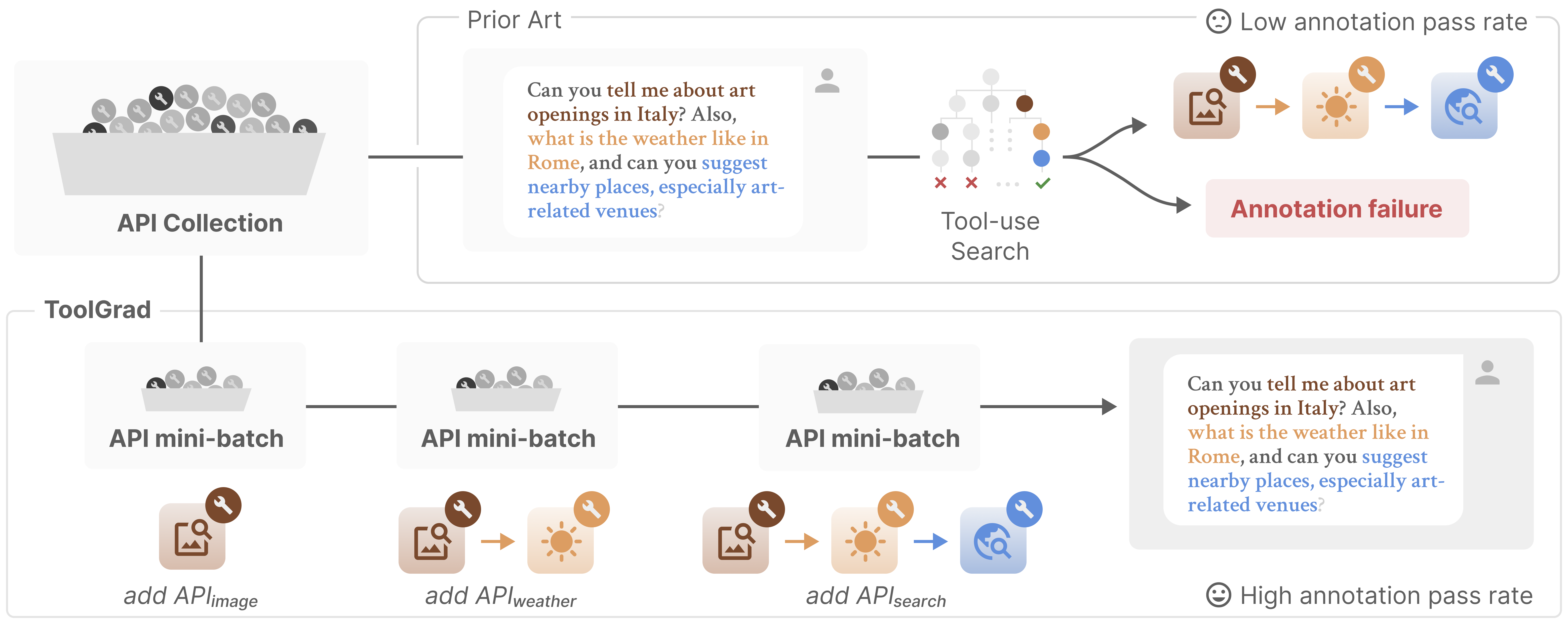
The emerging capacity for language models to effectively utilize external tools presents a significant opportunity for developers to build more capable and reliable AI applications. Google Research's work on ToolGrad details a novel method for efficiently generating high-quality datasets that teach large language models how to use various tools more effectively. The core idea involves using textual "gradients" – essentially, explicit descriptions of how a tool's output relates to a desired outcome – to guide the model's learning process, drastically reducing the data quantity needed for robust tool integration. This approach promises to streamline the development of AI systems that can interact with APIs, databases, or even physical devices with greater precision and adaptability. This advancement significantly impacts how founders and developers can approach building sophisticated AI solutions. Consider a small e-commerce shop in Austin, Texas, specializing in custom handcrafted goods. Instead of manually updating inventory across multiple platforms, they could develop an AI assistant trained with ToolGrad data to seamlessly interact with their Shopify store, a shipping API like FedEx, and an accounting system such as QuickBooks, automating order fulfillment and inventory management with high accuracy. Similarly, an indie SaaS founder in Seattle building a customer support platform might use this technique to train their AI to interact with disparate ticketing systems and CRM tools, offering a unified, highly responsive solution to their clients. For an internal IT team at a mid-sized financial firm in Chicago, integrating ToolGrad could mean building more intelligent bots that automate complex, multi-step tasks across legacy systems and modern cloud services, reducing human error and freeing up IT personnel for strategic work. To begin capitalizing on this, developers could identify a common, multi-step workflow in their current projects or operations that involves interacting with at least two distinct tools or APIs. Choose a simple, well-defined goal for this workflow and then experiment with manually crafting "textual gradients" that describe how each tool's output contributes to the next step, rather than simply providing input/output pairs. Observe how clearly articulating these relationships could hypothetically reduce the number of examples needed to teach a model this sequence.
Source / further reading
Learn more at Google Research →