
Redson Dev brief · PRIMARY SOURCE
Planetary prediction engine: Automating global models via Earth AI
Google Research · August 27, 2026
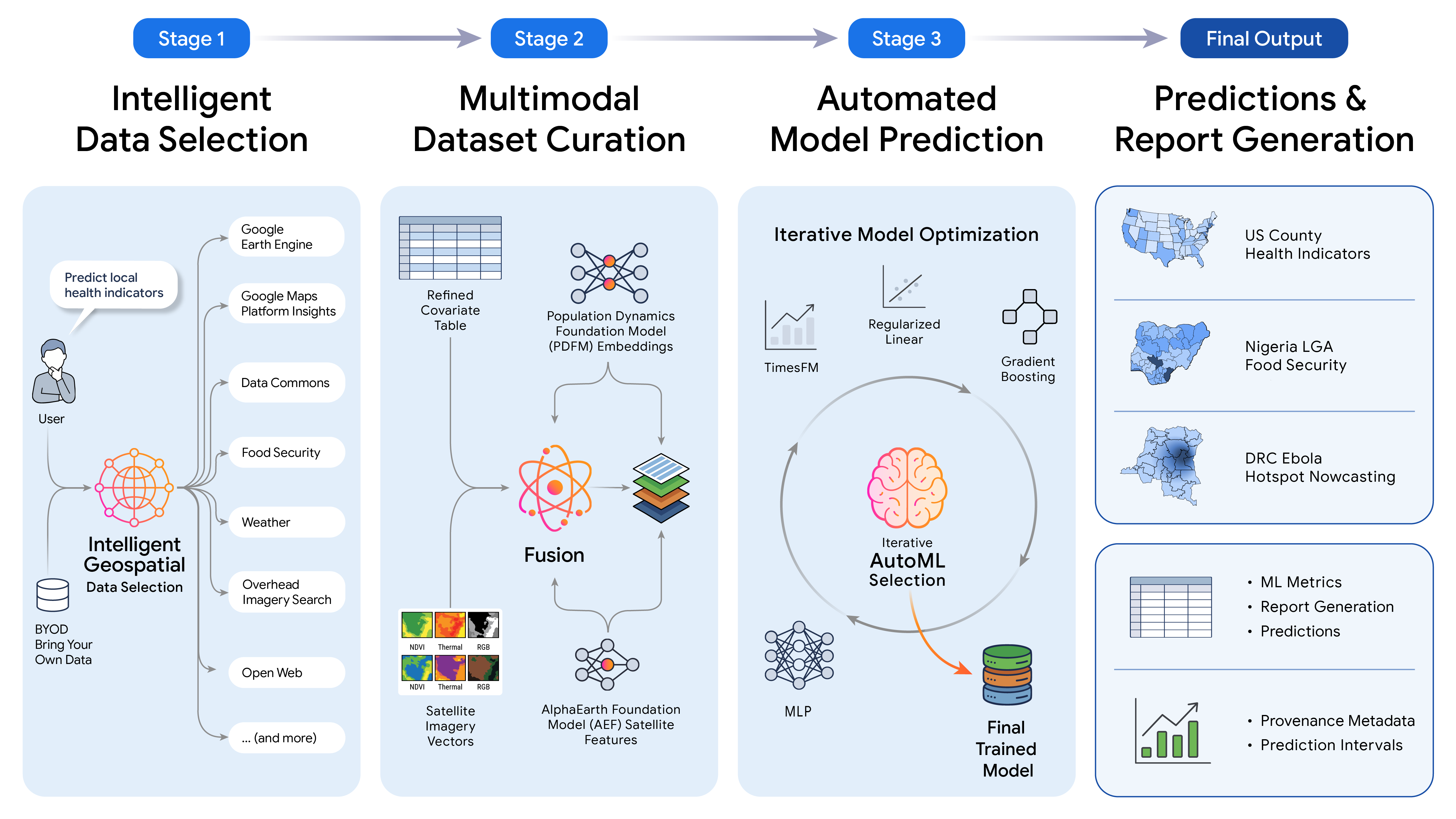
The advent of Earth AI from Google Research presents a tangible opportunity for any organization to leverage sophisticated global models without needing a dedicated team of geoscientists or advanced data infrastructure. This new approach automates the construction and maintenance of complex environmental models, moving beyond traditional, labor-intensive methods to create dynamic, continuously learning systems that can predict everything from air quality to agricultural yields by integrating diverse, real-world data streams. It's about transforming raw planetary data into actionable intelligence, making advanced environmental forecasting accessible to a wider range of businesses and public services. For a mid-sized municipal utility in, say, Sacramento, California, Earth AI could mean predicting localized flood risks with unprecedented accuracy weeks in advance, optimizing water flow through storm drains and reservoir releases, potentially saving millions in infrastructure damage and emergency response. A logistics startup based in Chicago, focused on last-mile food delivery, might use it to anticipate unexpected weather patterns that affect road conditions or delivery times, allowing for proactive re-routing and improved service reliability. Similarly, a sustainable agriculture co-op in rural Nebraska could gain precise, hyper-local insights into soil moisture, temperature fluctuations, and nutrient availability, enabling optimized irrigation schedules and targeted fertilizer application, thereby reducing waste and boosting crop health. The practical impact for readers is the democratization of complex environmental modeling, allowing them to integrate predictive analytics into their operations that were previously out of reach due to cost, expertise, or computational demands. To capitalize on this, consider one specific operational challenge in your business that is directly influenced by environmental factors, however subtle. For example, if you run a small e-commerce business shipping physical goods from Seattle, Washington, identify a recurring logistical bottleneck tied to weather or natural events. Explore how the availability of easily consumable, automated environmental predictions could inform your inventory management, shipping routes, or customer communication strategy.
Source / further reading
Learn more at Google Research →