
Redson Dev brief · PRIMARY SOURCE
SymptomAI: Towards a conversational AI agent for everyday symptom assessment
Google Research · July 22, 2026
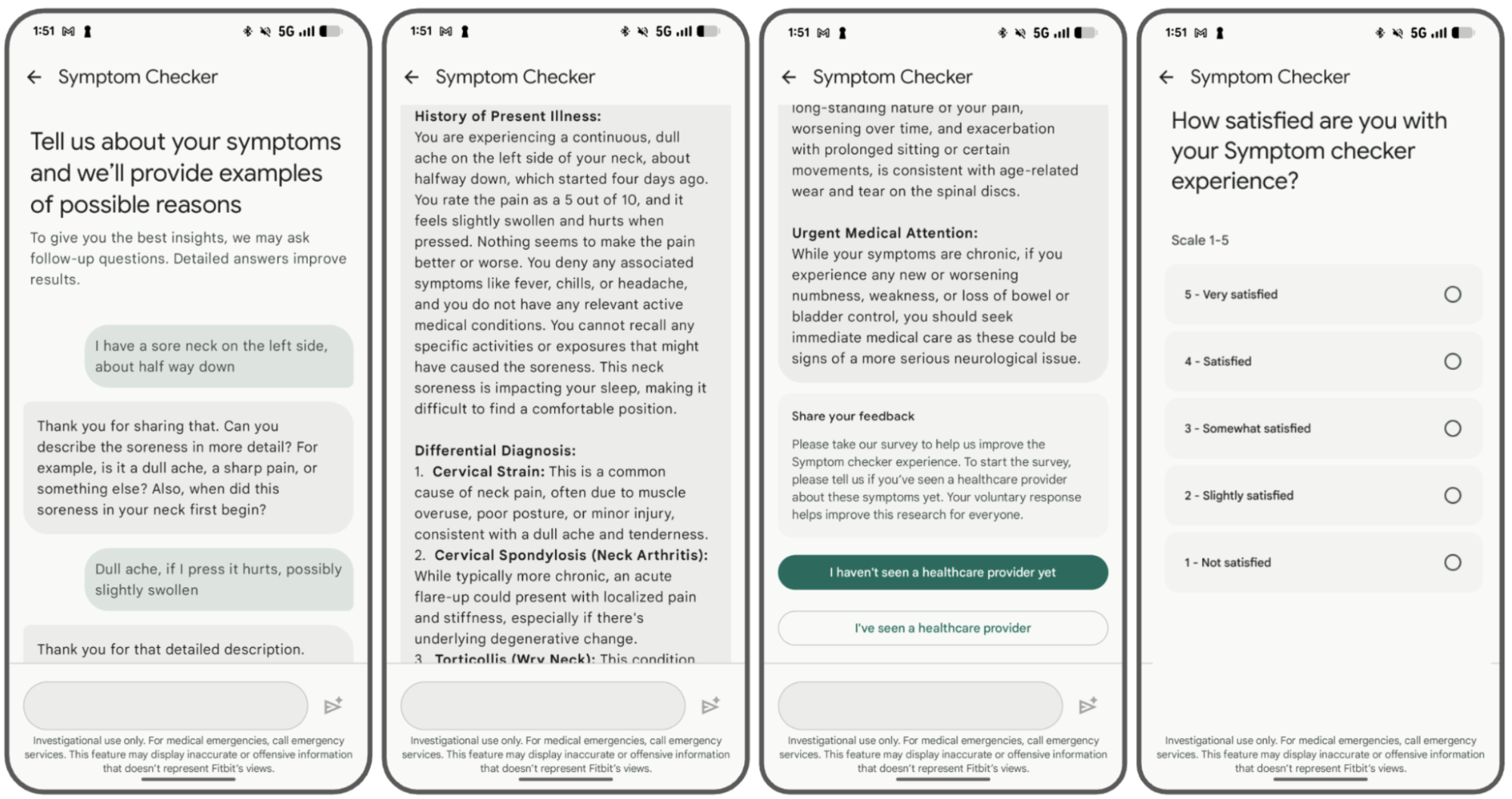
For anyone navigating health information, this new research from Google offers a critical step toward more accessible and reliable initial symptom assessment without requiring a direct interaction with a human clinician. The work details the development of SymptomAI, a conversational artificial intelligence agent designed to guide users through structured queries about their health concerns, ultimately leading to a detailed and summarized potential symptom profile. This AI leverages advanced natural language understanding and generation to mimic a careful interview process, aiming to provide a coherent summary for users to then discuss with a medical professional. The immediate impact for many is the potential to streamline preliminary health inquiries. Consider a logistics startup in Atlanta, Georgia, whose drivers are often on the road. Instead of searching broadly online or waiting for a clinic to open for a basic question, a driver could interact with such an AI to organize their thoughts about a persistent headache, generating a clear summary to share with their company's telehealth provider, saving time and reducing anxiety. Similarly, a busy parent in Portland, Oregon, trying to understand a child's mild fever could use this tool to compile relevant information before calling their pediatrician, ensuring they ask the right questions and provide a structured overview of symptoms. For an independent software developer building niche healthcare applications, integrating such an agent could add significant value, transforming a static informational portal into an interactive, supportive resource for patients. This technology isn't designed to diagnose or replace medical professionals, but rather to prepare individuals for more productive conversations with them. It acts as an intelligent assistant, organizing user input into a form that is immediately useful for medical review. For anyone working to improve patient access, reduce preliminary administrative burdens, or simply empower individuals with better health literacy, this is a significant development. To begin exploring this concept, identify a common, non-urgent information-gathering task in your own professional or personal life. Spend twenty minutes writing a simple, structured set of questions the way a sophisticated AI might, aiming to elicit specific details and then summarize them coherently. This exercise will illuminate the challenges and opportunities in converting open-ended queries into actionable, structured data, much like SymptomAI aims to do for health assessments.
Source / further reading
Learn more at Google Research →