
Redson Dev brief · PRIMARY SOURCE
The future of practice: Enabling teachers to create learning interactives with generative UI
Google Research · September 17, 2026
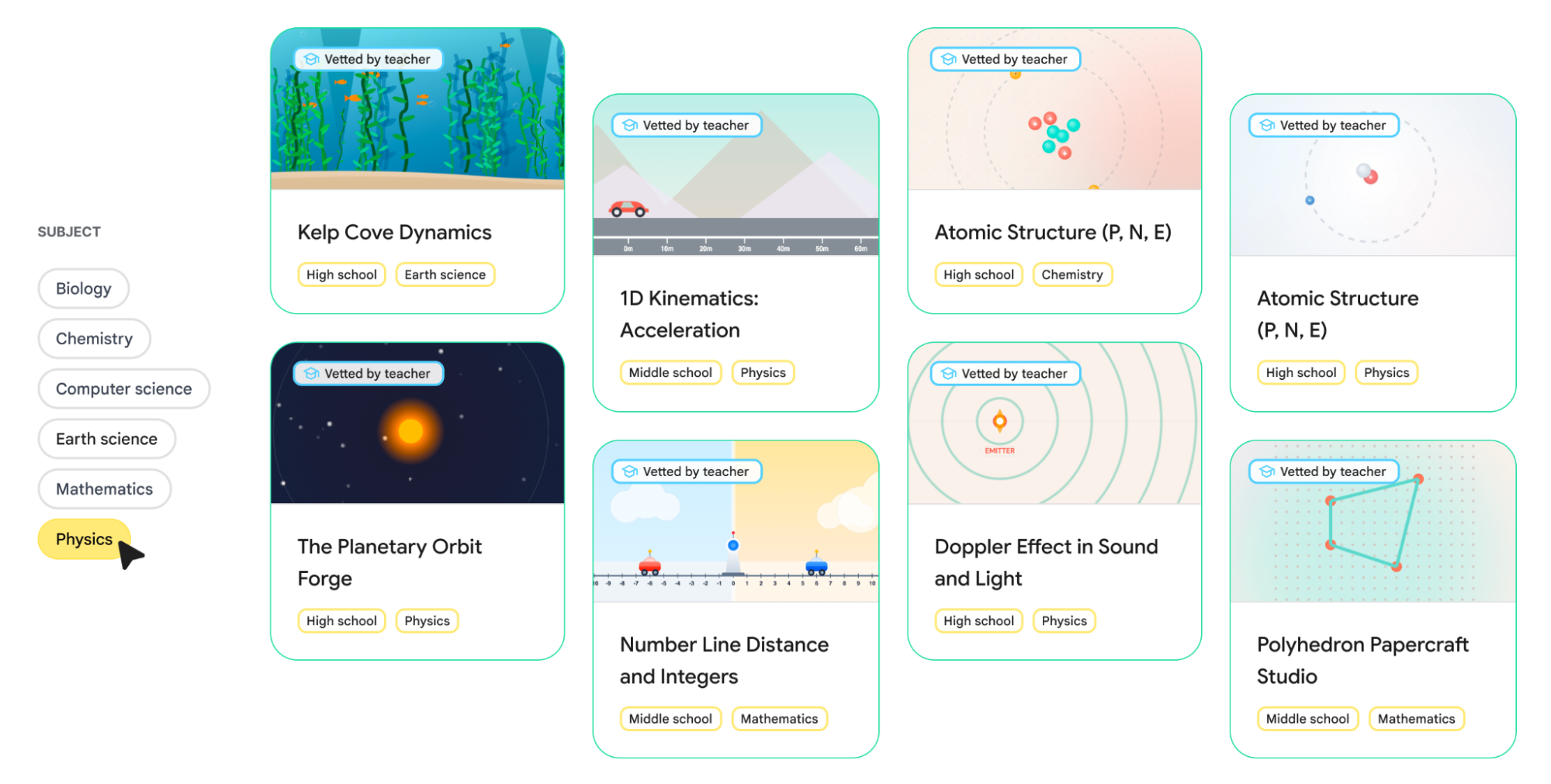
The ongoing challenge of rapidly developing engaging educational tools just got a significant boost through generative user interface capabilities. This Google Research piece details a system that empowers educators to design interactive learning materials without needing coding expertise, effectively turning conceptual lesson ideas into functional web-based exercises. By leveraging generative AI for UI creation, the system greatly reduces the technical barrier to developing custom educational content, allowing teachers to focus on pedagogy rather than programming. For developers and founders, this capability points to a powerful future for user-generated content platforms and specialized tooling. Consider an indie SaaS founder in San Francisco developing a niche platform for vocational training: instead of building complex visual editors, they could integrate a generative UI module that lets instructors quickly prototype and deploy interactive simulations for welding or electrical work. Similarly, a small e-commerce shop owner in Dallas aiming to onboard new staff could use such a system to generate interactive product knowledge quizzes or inventory management tutorials for their team, significantly cutting down training time and development costs. A mid-sized internal IT team at a hospital system in Atlanta might leverage this to allow department heads to create specific, interactive training modules for new medical equipment or updated compliance procedures, rather than relying on IT for every single build. The core value lies in democratizing complex UI generation, enabling subject matter experts to ship functional tools directly. To capitalize on this, consider a micro-experiment this week. For a current project or a pain point you're observing, identify a scenario where non-technical users consistently struggle to articulate or implement their UI needs. Envision how a generative UI prompt, much like describing an interactive lesson to an AI, could translate their textual or conceptual input into a functional wireframe or even a basic interactive prototype. Focus on a single, contained interaction and explore how much of the front-end grunt work could be bypassed by starting from a descriptive prompt rather than a blank canvas.
Source / further reading
Learn more at Google Research →